
At first glance, welding may seem far removed from earthquakes: one is a joining technology used in industrial manufacturing and structural construction, while the other is a natural phenomenon caused by movements of the Earth's crust. On closer examination, however, the two are closely connected, especially from the perspective of construction and the safety of steel structures.
The role of structural welds during an earthquake
Earthquake-resistant buildings, bridges, load-bearing structures and pipelines are all assembled using welded joints. During an earthquake, enormous dynamic forces arise and put every part of the structure to the test, particularly the joints and connections. Poorly executed welds or an unsuitable welding procedure can present a serious risk and may even lead to catastrophic structural failure.
Historical lessons: Northridge (1994) and Kobe (1995)
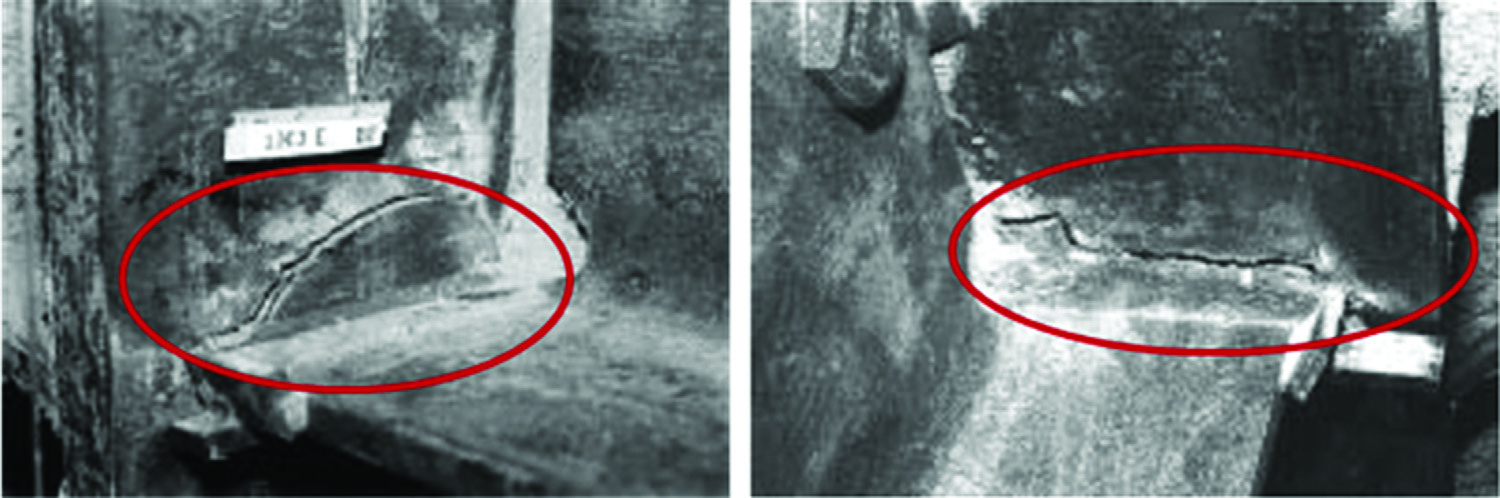
The 1994 Northridge earthquake in California and the 1995 Kobe earthquake in Japan became important cases in engineering literature partly because a number of modern steel structures were damaged. Detailed investigations showed that the behaviour of welded connections was crucial to the performance of the structures. Cracking and brittle fracture in welds, together with insufficient energy-absorption capacity, all contributed to the damage.
Welding-technology responses to seismic challenges
Experience led to several technological and regulatory changes:
- Improved electrodes and welding consumables: materials were developed that provide greater toughness and better crack resistance even at low temperatures.
- Preheating and heat treatment: accurately controlled preheating temperatures are required to achieve appropriate heat flow and reduce stresses, for example in accordance with EN 1011-1.
- Qualified welders and qualified procedures: structures intended for seismic environments are subject to special requirements for welding procedure qualifications (WPAR) and welder qualifications (WPQR).
- Non-destructive testing (NDT): ultrasonic, radiographic or magnetic testing can reveal hidden defects that may not be critical during normal operation but could become fatal during an earthquake.
Summary: welding is a key issue in earthquake resistance
Earthquake-resistant construction depends not only on design; the quality of execution is at least as important. A weld is not merely a simple connection, but one of the most critical elements of structural integrity. A small crack in a weld can become the weakest link in the entire structure. Therefore, for welded structures used in earthquake-prone areas, particular attention must be paid not only to appropriate design but also to high-quality welding technology.
References
- Karapetrou, M. E., Cizel, I. J. L. (2020). Seismic Design of Steel Structures. Elsevier.
- FEMA (1995). Performance of Welded Steel Moment Frames in the 1994 Northridge Earthquake. FEMA-347.
- AISC (2010). Design of Welded Steel Structures for Seismic Resistance. AISC.
- Ferreira, G. A. S., Silva, M. P. S. (2017). Seismic Resilience of Structures: New Trends in the Seismic Design of Steel Buildings. Springer.
- Lippold, J. C., Kotecki, D. J. (2005). Welding Metallurgy and Weldability of Stainless Steels. Wiley-Interscience.
- Van Stiphout, C. L. D., Zaat, M. B. C. H. M. (2014). Handbook of Seismic Risk Analysis and Management of Civil Infrastructure Systems. CRC Press.